
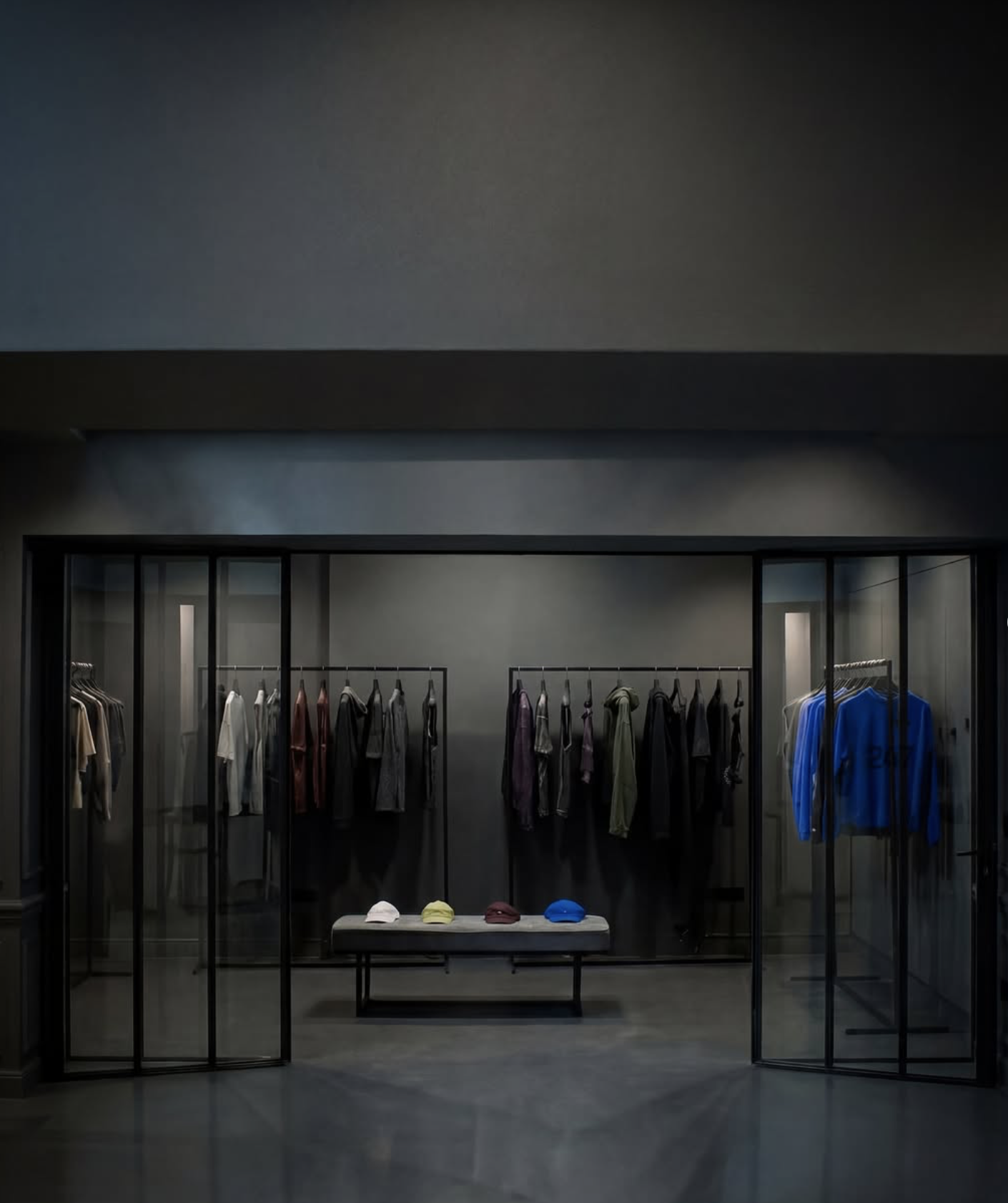
A strong product can create a transaction. A strong brand world gives people a reason to remember it.
That distinction is becoming increasingly important. Consumers encounter products across search results, social feeds, marketplaces and physical retail, often alongside dozens of alternatives offering similar features.
Product quality still matters. But quality alone does not necessarily explain why someone should choose one brand over another.
This is where brand world-building becomes commercially valuable.
A brand world is the interconnected system of visual, verbal, cultural and experiential signals that gives a product context. It tells people what the brand represents, who it is for and what participating in it feels like.
For founders and brand leaders, the objective is not to manufacture an imaginary universe around an average product. It is to turn a clear strategic position into something customers can consistently recognise and experience.
What Is Brand World-Building?
Brand world-building is the process of translating positioning into a recognisable environment around a product or service.
That environment can include photography, language, casting, packaging, retail design, music, collaborations, events, community, customer service and digital experiences.
The important word is system.
World-building is not adding more creative elements. It is ensuring those elements reinforce the same underlying idea.
A performance brand might build around discipline, movement and technical progression. A hospitality brand may centre ritual, escape and generosity. A fashion brand might construct a world around a specific cultural attitude.
The execution changes. The strategic centre does not.
Why Product Alone Is Becoming Harder to Differentiate
Many categories are becoming increasingly competitive.
Consumers can compare features, prices and reviews almost instantly. Manufacturing capabilities have become more accessible, and visual trends move rapidly between brands.
Target Accelerators describes differentiation as what makes a brand distinct and the brand proposition as the reason that distinction matters to the customer. That distinction is useful: differentiation is not simply looking different; customers need to understand why the difference is relevant.
A product advantage can also be temporary.
Competitors can introduce similar ingredients, fabrics, functionality, packaging formats or features.
A distinctive brand world is harder to reproduce because it is created through hundreds of connected decisions rather than one product attribute.
Brand Identity Is the Beginning, Not the World
A common misconception is that a visual identity automatically creates a brand.
It does not.
A logo, colour palette and typography provide recognisable assets. They are essential components of Brand Identity, but they cannot carry the entire strategic burden.
Consider what happens after the identity has been approved.
How is the product photographed?
Who represents the brand?
What does the retail environment feel like?
What does the brand sound like?
What partnerships make sense?
What happens at an event?
What does the packaging feel like in someone's hand?
A successful identity provides a foundation for answering these questions consistently.
The brand world is what happens when that identity begins living.
Why World-Building Matters Commercially
Brand world-building can affect much more than aesthetics.
First, it increases recognition. Repeated visual, verbal and behavioural signals make the brand easier to identify without relying entirely on a logo.
Second, it can support perceived value. Products are rarely evaluated only through manufacturing cost or functionality. Context affects what consumers believe something is worth.
Third, it creates more opportunities for participation.
A customer can purchase a product once. But they can engage with content, visit a physical space, attend an event, join a community, share an experience or participate in a collaboration many times.
Recent social-media behaviour reinforces this shift. Meta fashion partnerships executive Eva Chen has encouraged fashion brands to move from overly curated feeds towards documentation, personality, behind-the-scenes access and community interaction.
The implication is not that polished creative no longer matters.
It is that a brand increasingly needs to feel like something people can enter rather than something they can only observe.
How Do You Build a Brand World?
Start With Positioning
Before deciding how the world looks, define what it means.
What does the brand stand for?
What territory does it want to own?
What should people associate with it?
Why should customers choose it?
Strong Brand Strategy reduces arbitrary creative decisions later.
Without positioning, world-building easily becomes decoration.
Define the Codes of the World
Every recognisable world develops codes.
These might include particular environments, materials, colours, photographic treatments, phrases, sounds, objects, people or rituals.
The goal is not repetition for repetition's sake.
It is recognition.
A useful question for a creative team is: if the logo disappeared, would people still know whose world they were looking at?
If the answer is consistently no, the creative system may be relying too heavily on branding assets rather than distinctive brand codes.
Build Beyond Social Media
Instagram is not a brand world.
Neither is a website.
They are places where the world appears.
The same strategic idea should be capable of influencing packaging, events, retail, campaign concepts, customer communication and collaborations.
This is where Creative Strategy becomes important. It provides the bridge between abstract positioning and real-world execution.
Give Customers a Role
The strongest worlds are not complete without people.
Customers need a way to participate rather than simply receive advertising.
That could mean events, communities, clubs, challenges, rituals, user-generated content or physical experiences.
Fan-first brands increasingly treat their most engaged customers as participants and sources of insight rather than simply an audience. Poppi, for example, has described using its community for social listening, cultural observation and even product ideas.
Participation transforms brand communication from something delivered to an audience into something built with one.
World-Building Does Not Mean Creating More
There is a danger in the term.
Brands can interpret world-building as permission to produce more campaigns, more events, more content and more visual complexity.
The opposite can be true.
Strong brand worlds have boundaries.
They know what belongs and what does not.
Consistency is created through editing.
Vivid Concepts approaches brand-world development as a decision-making system rather than a collection of aesthetics: the strategic question is not simply whether an idea looks good, but whether it strengthens the meaning the brand is trying to own.
That distinction prevents world-building from becoming moodboarding.
What Should Brand Leaders Consider?
Before expanding a brand world, decision-makers should be able to answer a few fundamental questions.
What is the central idea holding the brand together?
Which elements should remain recognisable across every touchpoint?
Where should customers encounter the brand beyond advertising?
Which cultural spaces genuinely make sense for it?
And, perhaps most importantly, what should the brand consistently refuse?
A brand that can become anything rarely means anything specific.
Conclusion
Products give people something to buy.
Brand worlds give those products meaning, context and cultural value.
That does not make product quality less important. It makes the relationship between product and brand more important.
For businesses building or revisiting their Brand Foundations, the opportunity is to stop treating identity, campaigns, retail, content and community as separate activities.
They should feel like different expressions of the same idea.
The product may create the first transaction.
The world around it gives people a reason to return.